Pixels vs. Perspective: Can AI Ever Replace the Human Eye Behind a Great Wallpaper?
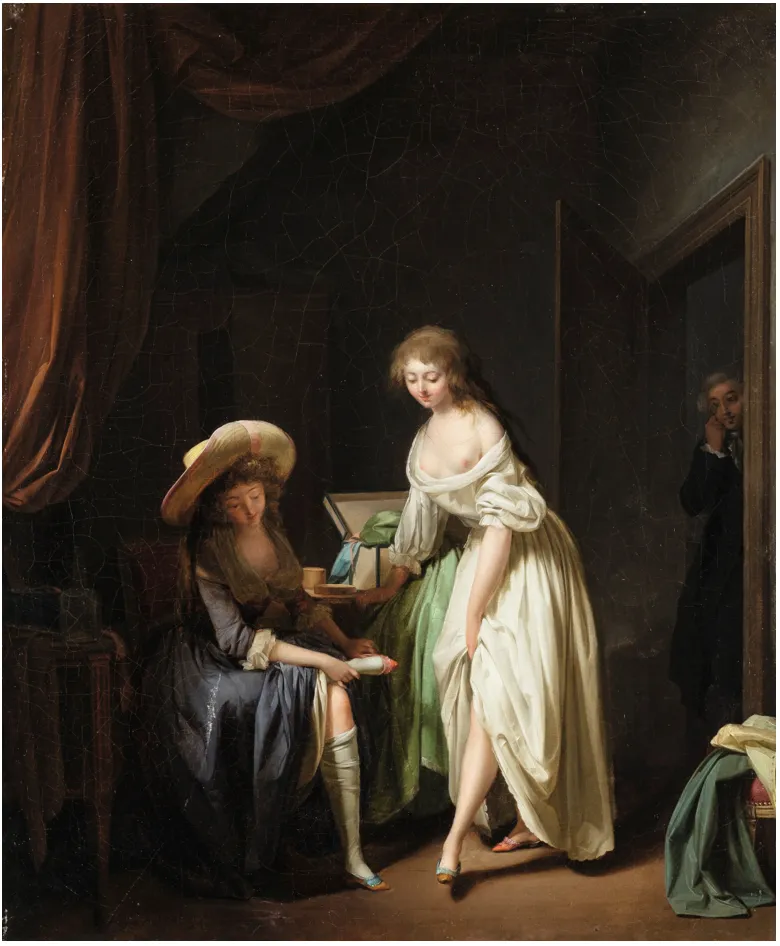
Photo: Louis-Léopold Boilly, Public domain, via Wikimedia Commons
The Machine Is Getting Very Good at This
Let's be honest: the first time most people saw a high-quality AI-generated image — one of those impossibly detailed fantasy landscapes or photorealistic abstract compositions — the reaction was something between awe and mild existential unease. These tools have gotten fast. Type a prompt, hit generate, and within seconds you've got something that would have taken a skilled digital artist hours to produce. For wallpaper enthusiasts, that's either great news or a troubling development, depending on who you ask.
In 2024, the conversation around AI-generated wallpapers has moved well past novelty. It's now a genuine debate about quality, authenticity, creative ownership, and what we actually value when we choose an image to represent our personal or professional space. We spent time with that debate — and with some of the artists living it firsthand.
What AI Does Really Well
There's no point dancing around it: AI image generation tools like Midjourney, Stable Diffusion, and DALL-E 3 are producing some legitimately stunning visuals. For wallpaper purposes specifically, they've got a few real advantages.
Variety at scale. Want a cyberpunk cityscape in the exact shade of teal that matches your monitor's color profile? A bioluminescent forest with a 21:9 aspect ratio? A minimalist abstract in the Pantone color of the year? AI can generate dozens of variations in the time it takes a human photographer to set up a single shot. For users who cycle through wallpapers frequently or have very specific aesthetic requirements, that kind of generative abundance is genuinely useful.
Seamless resolution. AI-generated images can be upscaled or generated natively at wallpaper-friendly resolutions without the grain or compression artifacts that sometimes plague digitally enlarged photography. For ultra-wide monitors or 4K displays, that's a practical win.
Genre-bending creativity. AI doesn't have genre loyalty. It'll happily blend a Baroque painting style with a NASA deep-space photograph, or render a hyper-realistic coral reef in the color palette of a 1970s movie poster. Some of the most visually surprising wallpapers circulating right now came out of exactly that kind of unconstrained prompt experimentation.
What Gets Lost in the Algorithm
But here's where it gets interesting — and where the artists we spoke with had the most to say.
Jordan Kessler, a Denver-based landscape photographer who licenses work to wallpaper platforms, put it simply: "AI images are generated from patterns in existing work. They're statistically likely to be beautiful, in a way. But they're not from anywhere. There's no story behind them."
That might sound like a philosophical complaint, but it has practical implications for wallpaper quality. Great photography — the kind that makes you stop scrolling and actually feel something — usually has a specific quality of light, a particular moment in time, a compositional choice that reflects a real decision made by a real human being in a real place. AI can approximate that feeling with remarkable accuracy, but the approximation has a ceiling.
Designers and art directors often describe AI imagery as having a kind of "uncanny valley" quality — not in the creepy, humanoid robot sense, but in the sense that something slightly off lurks beneath the surface of even the most technically impressive outputs. Textures that look right but don't quite behave right. Depth that feels slightly theatrical. Lighting that's gorgeous but doesn't correspond to any real-world physics.
For casual wallpaper use, most people won't notice or care. But for users with a trained eye — photographers, designers, illustrators — those subtle wrongnesses can be distracting in exactly the way you don't want your background to be.
The Ethics Question Nobody Wants to Skip
This is the part of the conversation that gets genuinely complicated. AI image models are trained on vast datasets of existing images, the vast majority of which were created by human artists and photographers — many of whom never consented to having their work used as training data and receive no compensation when the model produces outputs inspired by their style.
That's not a fringe concern. It's the subject of multiple ongoing lawsuits and a growing advocacy movement within the creative community. Artists like illustrator Sarah Andersen and photographer Karla Ortiz have been vocal about the issue, and platforms like DeviantArt and Getty Images have taken varying positions on whether and how to permit AI-trained content.
For wallpaper consumers, this creates a real values question. If you care about supporting human creativity — if part of why you seek out beautiful backgrounds is to connect with the work of real artists — then choosing AI-generated wallpapers exclusively puts you on one side of an ethical line that a lot of creatives feel strongly about.
That doesn't mean all AI wallpaper use is ethically indefensible. Tools trained on licensed, opt-in datasets exist and are growing. Some artists are actively embracing generative tools as part of their own creative process, using AI as a collaborator rather than a replacement. The picture is genuinely nuanced.
Side by Side: Where Each Shines
To make this concrete, think about a few specific wallpaper scenarios:
Nature photography — This is probably where human photographers still hold the clearest edge. A shot of Yosemite at golden hour, taken by someone who hiked in at 4am and waited for the light to be exactly right, carries something that no prompt can fully replicate. The atmosphere is real. The moment happened.
Abstract and geometric design — This is AI's home turf. Generating endlessly varied geometric patterns, color field abstractions, or fractal-style compositions is exactly the kind of task generative models excel at, and the "realness" of the image isn't really the point anyway.
Fantasy and sci-fi environments — Genuinely a toss-up. AI can generate spectacular otherworldly landscapes, but so can talented digital artists — and the artist-made versions often have stronger narrative coherence and more deliberate visual storytelling.
Portraiture and street photography — AI struggles here, and human photographers thrive. Candid human moments, documentary-style urban scenes, and portrait work all carry an authenticity that generative models can't manufacture.
What FindWallpaper Thinks
We're not here to pick a side in a culture war. Our job is to help you find backgrounds you love — and that means offering both. Our collection includes work from independent photographers and digital artists who license their images directly, alongside curated AI-assisted designs clearly labeled as such. We think transparency matters. You should know what you're looking at.
What we'd push back on is the idea that this is a zero-sum competition. The most exciting thing happening in wallpaper design right now might actually be artists who use AI as one tool among many — generating base compositions that they then paint over, relight, and reinterpret into something genuinely original. The line between "AI-generated" and "human-made" is getting blurry in productive ways.
What hasn't changed — and won't — is what makes a great wallpaper great. It stops you. It fits your space. It makes your screen feel like yours. Whether that comes from a photographer's lens or a model's latent space is, ultimately, up to you.