The Hills Are Still Green: Why Millions of Americans Refuse to Change Their Default Wallpaper
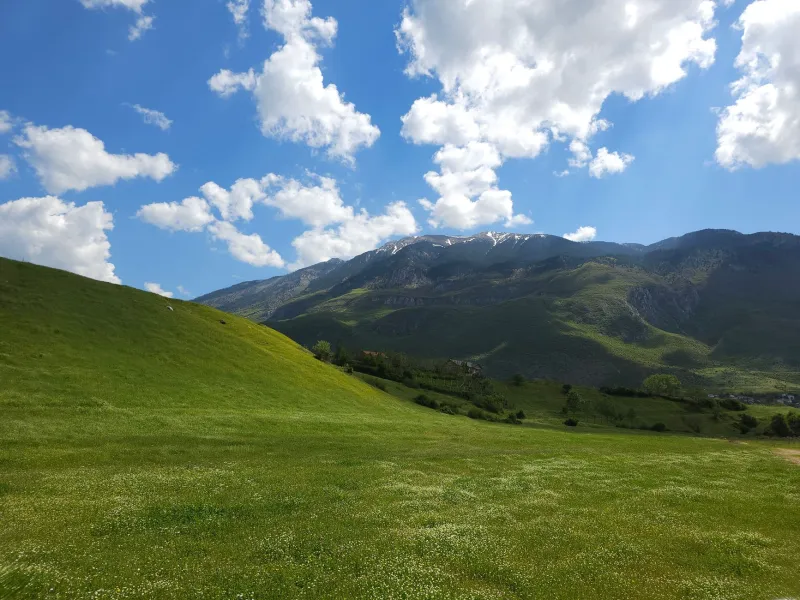
Somewhere in Ohio, a 54-year-old accountant has been looking at the same green hillside for over two decades. She never downloaded it. She never chose it. It came with the computer, and as far as she's concerned, it's staying there.
She's not alone. While wallpaper enthusiasts swap backgrounds like seasonal wardrobes — the average person changes theirs every six weeks, according to our own readership surveys — a quiet tribe of Americans never changes a thing. They're the never-changers, and their loyalty to factory-default backgrounds says something surprising about comfort, memory, and how tech companies design for attachment.
The Most-Viewed Photograph in History
Start with the obvious one: Bliss. Charles O'Rear's 1996 photograph of a rolling Sonoma County hillside, drenched in impossibly saturated green under a cotton-ball sky, became the default wallpaper of Windows XP in 2001. Microsoft reportedly licensed it for a five-figure sum, and it went on to greet hundreds of millions of desktops worldwide.
Here's the thing about Bliss: most people who stared at it never visited Napa County. They never saw the actual hill — which, by the way, is now planted with vineyards and looks nothing like the photo. The image was enhanced in post-production, its colors pushed toward a green so lush it borders on fictional. And yet for an entire generation of Americans, that fictional hillside is what a computer feels like.
"When I see it, I smell my dad's old Gateway," one reader told us. "I don't even know what to put there instead. It would feel like painting over a family photo."
Designed to Feel Like Home
Default wallpapers aren't accidents. They're the product of some of the most deliberate design work in the tech industry, because a background image is the first thing a customer sees when they power on a device they just spent $1,000 on.
Apple's approach leans abstract and luminous — those swirling, aurora-like gradients that ship with each new iPhone are engineered to feel premium and calming while showcasing display quality. Microsoft's modern defaults favor flowing glass-like ribbons and soft light. The goal, according to design teams who've spoken publicly about the process, is an image that's pleasant enough to live with indefinitely but neutral enough not to fight with your icons, your photos, or your mood.
In other words: they're designing for the never-changers on purpose. A default wallpaper is the only piece of software most people will look at every single day and never consciously notice. That's not a failure of design. That's the design working perfectly.
Confessions of the Never-Changers
We asked our readers to confess, and the never-changers came out in force. Their reasons fell into a few familiar camps.
"It just works." A surprising number treat the default the way they treat the factory car stereo — functional, fine, not worth the mental bandwidth. One IT administrator from Texas has run the same stock wave graphic since 2016. "I configure wallpapers for a living," he wrote. "The last thing I want is to make more decisions about my own."
"I don't want to think about it." Decision fatigue is real, and the default wallpaper is one decision that's already been made by someone with a budget, a focus group, and a color scientist.
"It reminds me of when things were simpler." This was the most common answer by far, and the most revealing. The default wallpaper is a timestamp. Boot up an old laptop running the original iPhone swirl or that XP hill, and you're not looking at an image — you're looking at who you were when you first saw it. Freshman year. Your first job. The apartment with the broken radiator.
The Nostalgia Economy of Factory Settings
Tech companies have noticed. When Microsoft brought back a modernized, Windows-Bliss-inspired aesthetic in recent updates, the internet responded like a class reunion. Retro wallpaper packs promising "that 2003 feeling" are a small but thriving corner of the creator economy. There's something almost funny about it: people downloading wallpapers designed to look like the defaults they never changed in the first place.
But it tracks with a broader pattern. In an era where almost everything on our screens is personalized, algorithmic, and constantly updated, the default wallpaper is one of the last truly static things in digital life. It doesn't refresh. It doesn't learn from you. It just sits there, green and patient, the way it always has.
Maybe that's the real answer to why America can't quit the default wallpaper. In a digital world of endless customization, choosing not to choose has become its own aesthetic — a little act of resistance, a little act of comfort, all rolled into one very green hillside.
So the next time you spot a stranger's laptop glowing with the same swirly gradient yours had five phones ago, give them a nod. You're both members of a quiet club: the ones who looked at the factory setting, shrugged, and found something in it worth keeping.