Bare Screen vs. Full Bleed: What Choosing Your Desktop Wallpaper Really Says About How You Think
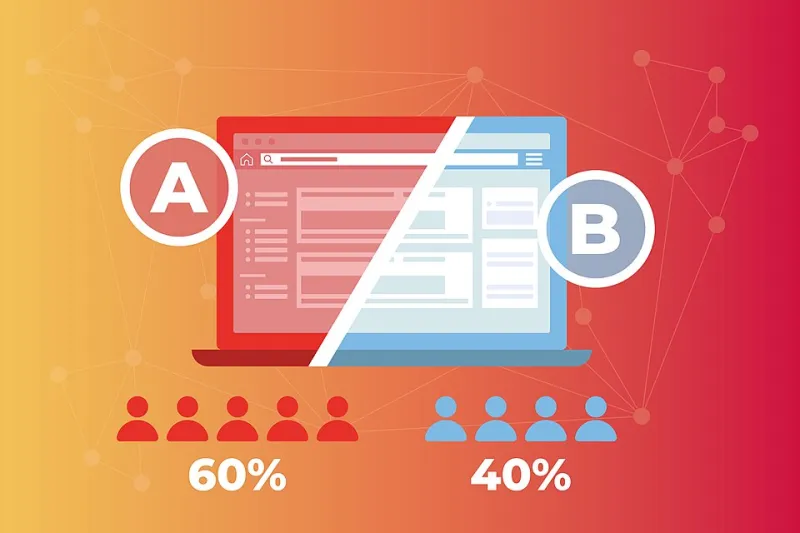
Photo: Zuko.io Images, CC BY 2.0, via Wikimedia Commons
Scroll through any "battlestation" thread on Reddit or a work-from-home setup tour on YouTube and you'll notice the wallpaper divide almost immediately. On one side: the clean-desk crowd, running solid dark grays, muted gradients, or a single stark geometric form. On the other: the maximalists, with sprawling fantasy landscapes, dense botanical illustrations, or layered cyberpunk cityscapes that look like concept art for a movie that hasn't been made yet.
Both groups are evangelical about their choices. And both groups, it turns out, have a point.
The minimalism-versus-maximalism debate in desktop wallpaper design isn't really about aesthetics. It's about how different brains process visual information — and what kind of environment helps each person do their best thinking. There's no universal answer here, but there are some genuinely useful frameworks for figuring out which side of the divide actually fits you.
The Case for Going Bare
Minimalist wallpaper philosophy borrows heavily from the broader minimalist design movement — the idea that reducing visual noise frees up cognitive bandwidth for the things that actually matter. In wallpaper terms, this usually means solid colors, simple gradients, abstract forms with plenty of negative space, or the kind of ultra-clean photography where a single object sits against an empty horizon.
Kayla R., a UX designer based in Austin, Texas, made the switch to a near-black solid wallpaper two years ago and hasn't looked back. "I have a lot of browser tabs, a lot of apps, a lot of visual information competing for my attention all day," she says. "The last thing I want is my actual desktop adding to that. The blank background is like having a clean desk. It just calms everything down."
This tracks with research on cognitive load theory, which suggests that the brain has a finite capacity for processing visual information simultaneously. When that capacity is eaten up by a richly detailed background image, there's simply less left over for the actual work on screen. For tasks that require sustained attention — coding, writing, financial modeling — a visually quiet desktop can function like noise-canceling headphones for your eyes.
There's also something to be said for the psychological signal a clean desktop sends to the person sitting in front of it. "It tells my brain we're in work mode," Kayla adds. "It's a small ritual, but it matters."
The Case for Going Big
But then there's Marcus T., a freelance illustrator in Brooklyn who runs a different kind of operation entirely. His desktop wallpaper rotates through a curated collection of Art Nouveau prints, dense jungle photography, and the occasional piece of fan art from games he loves. Ask him why and he'll give you a look like you just asked why he listens to music while he works.
"Visual inspiration is part of my job," he says. "I need to be surrounded by things that interest me, that spark something. A gray desktop feels like working in a waiting room."
This perspective has scientific backing too. Research on "environmental enrichment" — a concept originally developed in neuroscience but increasingly applied to workspace design — suggests that visually stimulating environments can elevate creative cognition, particularly for tasks that benefit from divergent thinking. A 2015 study from the University of Exeter found that employees in "enriched" office spaces (those decorated with art and plants) were 15% more productive than those in lean, stripped-back environments.
For creative professionals, students working on design projects, or anyone whose job involves generating ideas rather than executing defined tasks, a maximalist wallpaper isn't a distraction — it's fuel.
When Each Approach Breaks Down
Here's where it gets interesting: both philosophies can fail, and they tend to fail in opposite directions.
Minimalism breaks down when it tips into sterility. A featureless gray desktop doesn't just reduce distraction — it can also reduce stimulation to the point where boredom and mental flatness set in. Several remote workers interviewed for this piece mentioned that ultra-minimal setups started feeling oppressive during long stretches of solitary work-from-home days. "It started feeling like a server room," one marketing manager from Chicago admitted. "I needed something human in there."
Maximalism, meanwhile, breaks down under cognitive load. A stunningly detailed wallpaper that made your jaw drop on day one can become a subtle source of mental friction by week two — especially if you're doing work that requires deep focus. Students in particular reported that complex, colorful wallpapers during exam prep periods made it harder to settle into sustained reading. "I'd look up from my textbook and my brain would just... go somewhere else," said Priya, a pre-med student at UCLA.
The failure mode, in both cases, is the same: the wallpaper stops serving the person and starts serving itself.
The Hybrid Move Nobody Talks About Enough
The most interesting approach that emerged from talking to real users wasn't a firm commitment to either camp — it was intentional switching based on context.
Several designers and developers described maintaining two or three wallpaper profiles: one stripped-back option for deep work sessions, and one richer, more expressive option for creative brainstorming or casual browsing. Some tied it to time of day. Others linked it to the type of work on their task list.
This contextual approach treats the desktop background not as a static identity statement but as a functional tool — something you adjust based on what your brain needs right now, the same way you might put on headphones for focus or open a window for a change of energy.
So Which One Are You?
Rather than picking a team, the smarter question is: what does your work actually require?
If your job demands extended concentration, precise execution, or managing large volumes of information, a quieter wallpaper is probably your ally. If your work lives in the creative space — generating concepts, making visual connections, staying inspired across long stretches — a richer environment might genuinely help.
And if you're not sure? Try both. Spend a week with something minimal and pay attention to how your focus feels. Then swap in something bold and expressive and notice what changes. Your own experience is better data than any trend.
The best wallpaper isn't the most beautiful one or the most fashionable one. It's the one that makes you better at being you — and that's a question only your screen can answer.