The Little Canvas You Stare at 100 Times a Day: What Your Lock Screen Is Really Telling the World
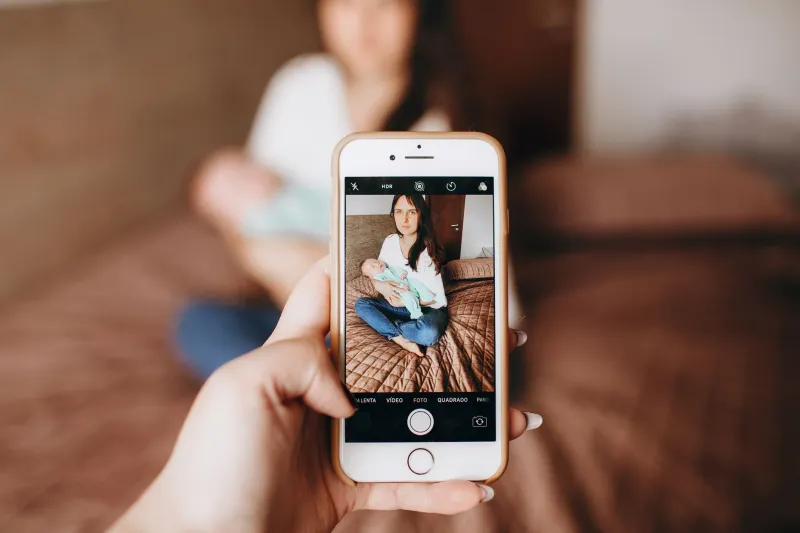
There's a moment in every friendship when you glimpse someone's lock screen by accident. Maybe they hand you their phone to look at a photo, or it lights up on the coffee table between you. And suddenly, you know something about them. Something real.
That's the strange power of the lock screen. Of all the wallpapers in your life — desktop, tablet, smartwatch — it's the one you see most and think about least. Researchers estimate the average American checks their phone somewhere between 80 and 150 times a day, and nearly every one of those glances lands on the same image. A golden retriever. A toddler in a pumpkin patch. A sunset from a trip to Sedona. A quote about grinding harder.
We spend hours curating our Instagram grids and agonizing over our desktop backgrounds. The lock screen, though? That one tends to choose itself. And that's exactly what makes it so revealing.
The Wallpaper You Didn't Decorate
Think about how most lock screen photos end up in place. Nobody schedules a photoshoot for it. Usually it's a candid — a niece mid-laugh at Thanksgiving, a dog sprawled on a hardwood floor, a blurry shot from a concert that meant something. It stays for months, sometimes years, quietly outlasting every deliberate design choice on your home screen.
Behavioral psychologists have a term for objects we keep close without consciously deciding to: they function as attachment cues. The lock screen is the purest example most of us own. It's not performing for anyone. Unlike your Instagram, there's no audience feedback loop. Unlike your desktop wallpaper, it isn't tied to productivity or aesthetics. It just has to be something you want to see a hundred times a day.
When we asked friends and readers what's on their lock screen, the answers clustered into a few unmistakable camps — and each one says something different about the person holding the phone.
The People Screen
By far the most common answer: family, partners, kids, pets. A woman in our informal poll described her lock screen as "my why" — a photo of her late father that she's never swapped out in four years. Another said her toddler's face is there "so I remember what I'm doing all this for" when a work notification pops up at 9 p.m.
There's real psychology underneath this. Studies on self-control and motivation have long shown that reminders of loved ones can buffer stress and nudge better decision-making. In one line of research, people primed with photos or names of close relationships made more patient, future-oriented choices. Your kid's face glowing up at you when you reach to doomscroll isn't just sweet — it may be quietly steering your behavior.
Pets deserve their own mention here. Dog and cat lock screens are so ubiquitous they've become a cultural punchline, but the impulse is the same: an unconditional, judgment-free presence on the most anxiety-inducing object you own.
The Aspiration Screen
Then there's the other camp: the mountain range, the ocean at dawn, the Greek word for discipline in a serif font. These lock screens are less about who you are and more about who you're trying to become.
It's the digital equivalent of the motivational poster in a home gym. And like the poster, it works — briefly. There's nothing wrong with an aspiration screen, but behavioral researchers note that environment cues fade through repetition. The mountain you see 120 times a day stops being a mountain. It becomes furniture.
Which might explain a pattern we noticed: aspiration screens get swapped constantly. People screens get kept. One reader told us she changes her minimalist landscape "every couple weeks because I get bored," but her camera roll holds a photo of her grandmother she's used on and off for a decade. The wallpaper world is obsessed with novelty and freshness. The lock screen, for most Americans, is where permanence wins.
The Blank Screen
And then there's the third group — smaller, but vocal: the people running a pure black lock screen, or the factory default. Ask them why and you'll hear about battery life, privacy, or minimalism. But dig a little and a different theme emerges. Several admitted the blank screen started during a hard stretch of life — a breakup, a job loss — and never got replaced. "I just didn't have a photo I wanted to see that often," one person said.
A default lock screen can be a reset, a neutral zone. It can also be a pause. Either way, it's worth noticing. The absence of an image is still a choice about what you want greeting you a hundred times a day.
Try the Nightstand Test
Here's a small exercise, and we mean it in the friendliest way: tonight, when you set your phone on the nightstand, look at what's on that screen. Then ask two questions.
First: does this image still mean something to me? Not "is it a good photo" — does it mean something? Lock screens have a way of outliving their moment. The vacation photo from a trip with someone you no longer speak to. The motivational quote from a version of you two jobs ago. Screens can hold ghosts.
Second: is this the image I want to see on my hardest days? Because that's when the lock screen does its real work. Not on the good days, when you barely glance at it. On the days when you open your phone to escape and instead meet a face, a memory, a place that steadies you.
If the answer to either question is no, that's not a failure — it's just information. Unlike so much of digital life, this one takes ninety seconds to fix. Pick a photo. Any photo that earns those hundred daily glances.
At FindWallpaper we talk a lot about resolution, aspect ratios, and matching your desktop to your mood. But the lock screen is the one wallpaper where none of that matters. It's not measured in pixels. It's measured in how many times a day something makes you pause for half a second — and smile, or breathe, or remember.
That tiny canvas might be the most honest portrait of you that exists. Make sure you like what it says.