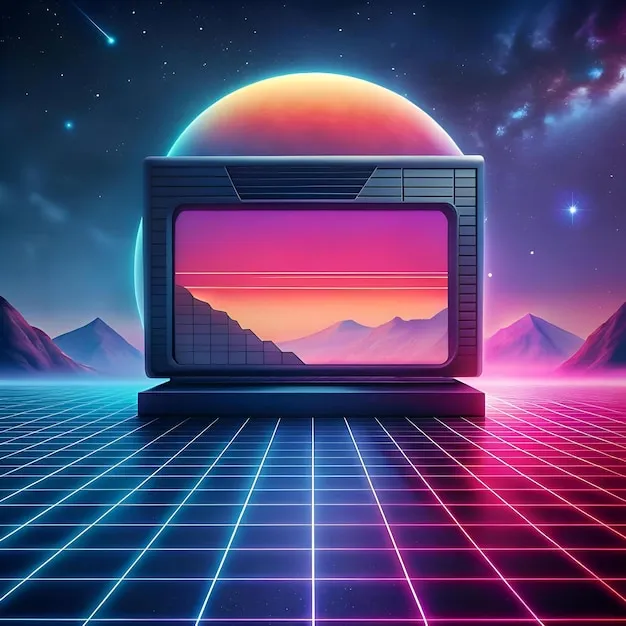
Why You Keep Changing Your Wallpaper (And What Your Brain Is Actually Doing When You Do)
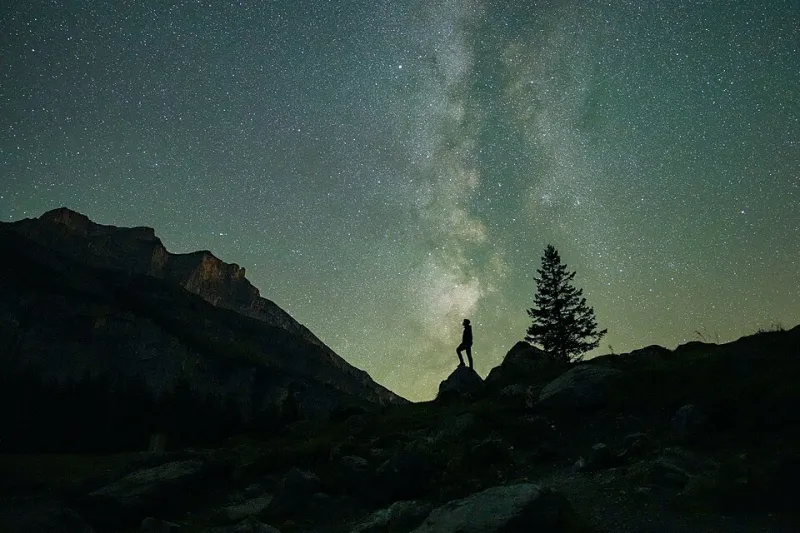
Photo: Giles Laurent, CC BY-SA 4.0, via Wikimedia Commons
Be honest: how many times have you changed your wallpaper in the last month? If the answer is "more than I'd like to admit," you're in good company — and you're also not as random as you think.
That restless urge to swap out your desktop or phone background isn't just digital fidgeting. Researchers in color psychology, environmental psychology, and neuroscience have been quietly building a case that the images we choose to surround ourselves with — even digitally — have measurable effects on our mood, focus, and emotional regulation. And the compulsion to keep changing them? That's your brain being surprisingly sophisticated.
The Dopamine Loop You Didn't Know You Were Running
Here's where it gets interesting. Neuroscientists have long studied what happens in the brain when we encounter novel visual stimuli. New images — especially ones with strong color contrast, natural elements, or unexpected compositions — trigger a small but real dopamine response. It's the same mechanism that makes you feel a little flicker of pleasure when you peel back a sticker or open a new app for the first time.
When you change your wallpaper, you're essentially giving your brain a tiny, low-stakes hit of novelty. Your visual cortex lights up. There's a moment of "oh, that's new" — and that moment feels good. The catch is that the effect diminishes quickly. What felt fresh and energizing on Monday feels invisible by Thursday. Your brain has already cataloged it as background noise, and suddenly you're back on a wallpaper browsing site at 11pm looking for something better.
This isn't a flaw in your personality. It's a feature of how human perception works. We're wired to notice change and habituate to sameness. Your wallpaper-changing habit is just that wiring expressing itself in a very 21st-century way.
Color Is Doing More Than You Think
Beyond the novelty effect, the specific colors in your chosen wallpaper are actively influencing your mental state — often without you realizing it.
Color psychology is a well-established field, and while some of its pop-science applications are overstated, the core findings are solid. Blues and greens tend to lower cortisol levels and promote a sense of calm — which is part of why nature photography and ocean scenes are perennially popular wallpaper choices. Warm yellows and oranges can stimulate energy and creativity, but in high saturation they can also increase feelings of anxiety. Deep, muted tones — charcoal, forest green, burgundy — create a sense of psychological safety and grounding.
What's fascinating is that these effects operate largely outside of conscious awareness. You don't have to think "this blue is calming me down" for it to actually calm you down. Your nervous system is responding to color input continuously, and your desktop background is a color stimulus you're exposed to dozens of times a day. That adds up.
Environmental psychologists who study how physical spaces affect human behavior have started applying the same frameworks to digital environments. Your screen is, in a very real sense, part of your environment. The background image is the equivalent of the paint color on your office wall — and just like wall color, it matters more than most people give it credit for.
Seasonal Mood Shifts and the Wallpaper Cycle
If you've noticed that your wallpaper preferences shift with the seasons, that's not a coincidence either. Seasonal Affective Disorder gets a lot of attention, but even people who don't experience clinical SAD tend to have mood and energy patterns that track with the time of year. Shorter days and less sunlight in fall and winter create a genuine neurological shift — serotonin production drops, melatonin increases, and many people instinctively seek out warmth and coziness in their environments.
This plays out directly in wallpaper trends. Search interest in cozy cabin scenes, warm amber tones, and moody forest imagery spikes every October. By February, people are already reaching for soft pastels and early spring botanicals — sometimes weeks before the actual weather changes. It's like our brains are using our screens to pre-load the emotional experience of the coming season.
Working with this instinct rather than against it is a genuinely useful wellness strategy. Intentionally choosing a wallpaper that evokes the emotional state you want to cultivate — rather than the one you're currently stuck in — can function as a subtle but real form of mood scaffolding.
The Emotional Regulation Angle
Psychologists who study emotional regulation — the ways we manage and modulate our internal emotional states — have identified something called "environmental cueing." Basically, we use our surroundings as external anchors for internal states. A candle, a particular playlist, a specific mug — these objects don't just accompany certain emotional states, they help produce them.
Wallpapers can function the same way. If you consistently use a particular type of background during focused work sessions — say, a clean, minimal geometric design with a cool color palette — your brain starts to associate that visual with the mental state of focus. Over time, just seeing that wallpaper starts to nudge you toward that state. It's a lightweight version of the kind of environmental design that productivity researchers talk about, and it's surprisingly accessible.
The flip side is also true. If your current wallpaper is associated in your memory with a stressful period — maybe you set it during a difficult stretch at work and never changed it — it might be subtly reinforcing that stress even after the circumstances have changed. Sometimes the most useful thing you can do for your mental state is just... swap out the background.
How to Be Intentional About the Urge
So what do you actually do with all of this? Here are a few practical ways to turn your wallpaper-changing habit from a mindless tic into a genuine wellness tool.
Match color temperature to your goals. Cool blues and greens for focus and calm. Warm earth tones for creativity and comfort. Avoid high-saturation reds and oranges if you're already feeling stressed or overstimulated.
Build a seasonal rotation. Instead of randomly changing wallpapers whenever you feel restless, create intentional collections for each season. This gives your brain the novelty it craves while keeping your digital environment emotionally coherent.
Use nature imagery strategically. Research on attention restoration theory consistently finds that natural scenes — forests, water, open sky — have a measurable restorative effect on mental fatigue. If you're burning out, a nature wallpaper isn't just pretty; it's functionally useful.
Pay attention to what you keep returning to. If you find yourself consistently gravitating toward a particular aesthetic or color family, that's real information about what your nervous system finds regulating. Lean into it rather than fighting it.
Give yourself permission to change it often. Seriously. The novelty response is real, and there's nothing wrong with feeding it. The goal isn't to find one perfect wallpaper and stick with it forever — it's to be thoughtful about what you choose and why.
Your Screen Is Part of Your Environment
We spend an enormous amount of time and energy curating our physical spaces — choosing furniture, painting walls, buying plants. It's worth extending some of that intentionality to our digital spaces too.
Your wallpaper is the first thing you see when you open your laptop and the last thing you see before you close it. That's a lot of visual real estate to leave to chance. The science says it matters. Your instinct to keep refreshing it says you already know that, even if you couldn't quite explain why.
So the next time you find yourself deep in a wallpaper browsing session at an unreasonable hour, don't feel weird about it. You're just doing what human brains do — looking for the right image to match the inner landscape you're trying to build.