The Always-On Aesthetic: When Your Screen Becomes Furniture

Photo: Aeroprints.com, CC BY-SA 3.0, via Wikimedia Commons
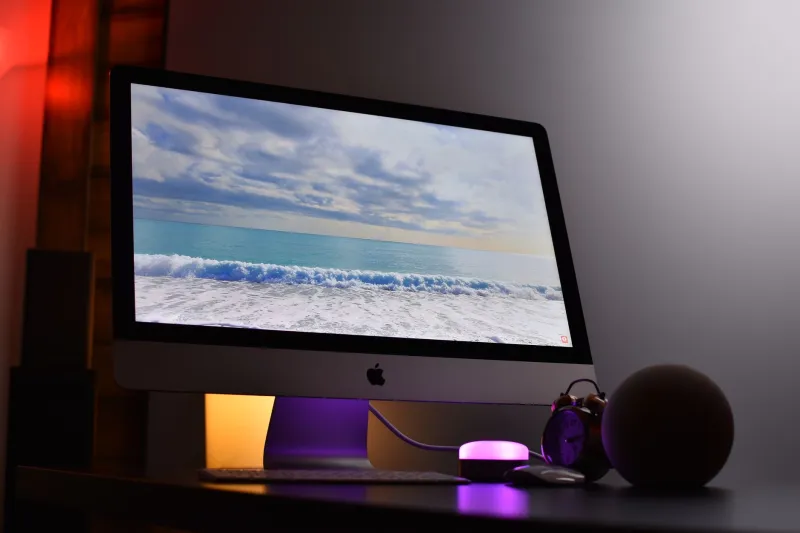
Walk through enough American living rooms in 2026 and you will notice a shift. The screen is no longer just the thing you turn on for a show. It hangs there all day, showing a slow-motion coastline, a rotating gallery of botanical prints, or a very still photograph of a lake at dawn.
The always-on screen has become decor. And like any decor decision, it can be done beautifully or it can be done in a way that quietly makes everyone in the room a little more tense.
From Utility to Atmosphere
Part of this is hardware catching up. Frame-style televisions with matte, anti-glare panels look like art from across the room. Smart displays sit on kitchen counters and console tables. Tablets get wall-mounted in hallways. Amazon and Best Buy have spent years nudging shoppers toward ambient modes and photo displays as headline features, and it worked.
Part of it is design culture. Warm minimalism, low lighting, and linen-everything have made a glowing rectangle a tricky object to justify. Turning that rectangle into a soft, low-contrast landscape is a way to keep the technology without letting it shout.
The Case for the Ambient Wall
When it works, it really works. A muted image on a large screen can do something a framed print cannot: it can change with the season, the time of day, or the mood of the room, without anyone hauling a ladder out.
In small apartments, where wall space is precious and one object has to earn its footprint twice over, an ambient display handles decor and media duty at once. Renters who cannot hang shelves can at least change what the screen shows. That flexibility is genuinely valuable, and it is why the trend has legs beyond the aesthetics of any single product cycle.
The Difference Between Ambient and Alerting
Here is where most setups go wrong. An ambient screen should be background. The moment it starts delivering the weather, a package notification, a calendar reminder, and a moving photo collage at the same time, it has become a second phone — one that is bolted to the wall and impossible to put in your pocket.
Take an honest inventory of what is actually running on that display. A slideshow of five images is ambient. Thirteen widgets and a rotating carousel of news headlines is a billboard.
Choosing Wallpaper for a Room, Not a Phone
Room-scale images have different rules than the one on your lock screen. A few that matter:
- Drop the brightness way down. Most ambient setups look best at 20 to 40 percent, especially after dark.
- Avoid stark white backgrounds. They turn a living room into a showroom at night and cast a cold cast on everything around them.
- Prioritize low contrast. Big, soft transitions read as calm from across a room. High-contrast images read as a lit sign.
- Skip anything that moves fast. Slow pans and gentle fades are fine. Time-lapses and looping video pull attention every time they reset.
- Match the warm-cool balance of your lighting. A blue-toned arctic landscape will fight warm lamps and a fireplace. It sounds fussy. It reads as wrong almost instantly.
- Leave text out of it. Typography on a wall-mounted screen looks like signage, not art.
The Anxious Part
There is a mild irony worth naming. A lot of these screens are sold on calm — soft light, gentle imagery, a house that breathes. But adding an always-on display to a room also adds another device with settings, a schedule, an app, and a firmware update waiting to interrupt a Saturday.
And a glowing image is still a glowing image. If it is the brightest thing in the room at 11 p.m., your brain treats it like a light source, not like a painting. Some people genuinely sleep worse with one in the bedroom, and the research on evening light exposure has not gotten friendlier.
There is also a subtler issue: ambient screens are easy to leave on out of habit rather than intention. A painting does not require maintenance. A display that shows one image forever is just an expensive, quietly humming alternative to a poster. The value only shows up if the thing is actually changing with your day, dimming when it should, and going dark when the room goes dark.
A Short Checklist Before You Mount It
- Set a real schedule. Off at bedtime, on at sunrise, or on when motion is detected.
- Use a warm, low-luminance setting after sunset.
- Choose one visual theme and stick to it for a season.
- Turn off notifications entirely. All of them.
- Position it so light does not bounce off nearby glass or a glossy tabletop.
- Ask whether it is visible from the sofa or the doorway — the two angles that matter.
What Calm Actually Looks Like
The best ambient setups we have seen share something unglamorous: restraint. One image at a time. Low brightness. No widgets. A screen that gets out of the way of a conversation.
That is the whole trick. You are not decorating a screen. You are lighting a room — and the good ones are the ones nobody is thinking about.