Out of the Corner of Your Eye: The Quiet Rise of the Companion Wallpaper

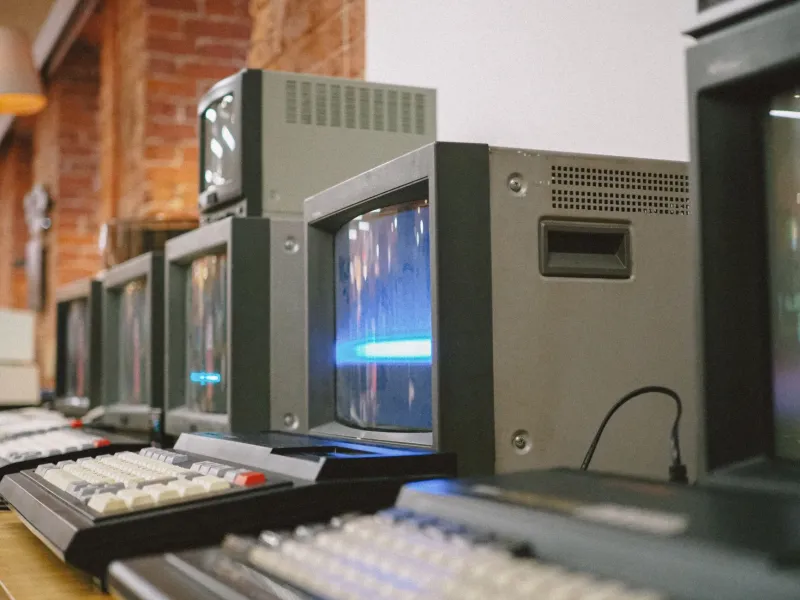
Photo by Photo by Sandeep on Unsplash on Unsplash
Ask around any American home office and you'll find the same story. The main monitor got thought. The laptop screen got a photo from a trip to Sedona. The second monitor? It's running the default Windows blue from 2021, or worse, a screenshot somebody never meant to keep.
That's starting to change. A quiet trend — call it the companion wallpaper — has secondary screens getting the same deliberate treatment as primary ones, just with completely different rules.
Peripheral Vision Is a Design Constraint
Here's the thing about a second monitor: you're rarely looking directly at it. It lives in your peripheral vision, that wide, motion-sensitive band of sight that evolved to catch predators, not pixel art. A busy, high-contrast image on that screen doesn't just sit there — it tugs at you. Every flicker of white, every saturated streak registers as a tiny event your brain has to triage.
Designers who think about this stuff have a simple rule of thumb: the further a screen sits from your center of gaze, the calmer its background should be. Low contrast. Muted tones. No hard edges near the top of the image where your eye naturally drifts.
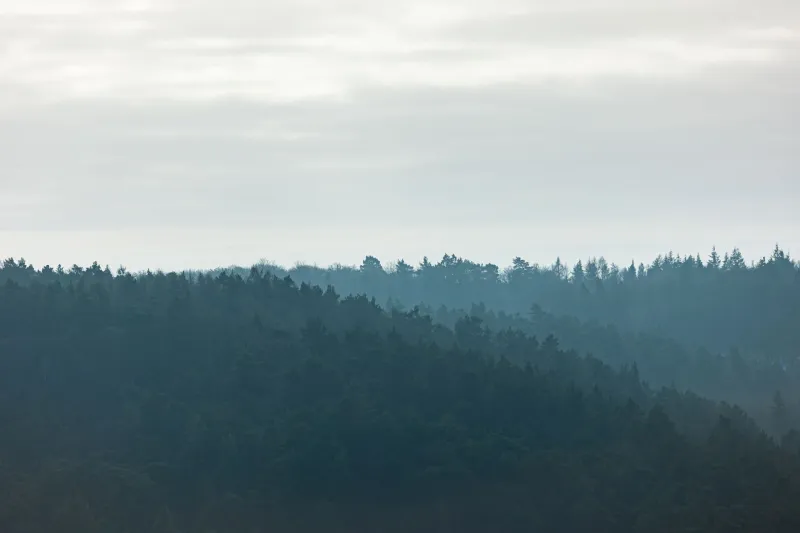
Think foggy mountain gradients, deep navy textures, soft charcoal with a single warm accent. The kind of image that reads as "a room with good lighting" rather than "a picture."
The People Actually Doing This
Talk to remote workers who've made the switch and a pattern emerges: they describe assigning a mood to each screen.
"My main display is where I do the work, so it gets something I actually want to look at — a landscape, something with energy," says a project manager in Denver who works hybrid for a software company. "The side monitor is where my email and Slack live. That one gets a flat, dark texture. It's basically visual noise-canceling."
Streamers took the idea even further, for practical reasons. Anyone who's watched a livestream has noticed the background peeking out behind the game window. Streamers learned quickly that a loud wallpaper on the secondary screen reads as clutter on camera — and worse, distracts viewers. The fix: subdued, dark, low-detail backgrounds that disappear into the scene.
Graphic designers, meanwhile, treat the second monitor like a neutral zone. When your main display is full of color work, a gray or warm-neutral companion background acts as a reference point — a reminder of what "no color cast" actually looks like.
Why the Second Screen Got Ignored for So Long
Part of it is just inertia. Wallpaper culture — the downloads, the rotations, the seasonal swaps — has always been about the screen you face. The hero screen. The second monitor arrived in our lives as a productivity tool, a place to park a spreadsheet, and nobody thought to give it a personality.
There's also a resolution problem that only recently went away. Older secondary displays were often mismatched hand-me-downs with washed-out panels. Nobody wallpapers a screen that makes everything look like a fax. Now that a matching 27-inch pair costs about the same as a nice dinner for two, the side monitor finally deserves art.
Building Your Own Companion Setup
If you want to try this, the formula is refreshingly simple:
- Keep contrast low. Deep tones and soft gradients beat bright whites and neon.
- Match the screen's job. Email and chat monitors want calm; reference monitors want neutrality.
- Think about the top edge. That's where your eye lands when you glance over, so keep it quiet.
- Let the pair relate, not match. A moody landscape on the main screen pairs nicely with an abstract detail or color study on the side — siblings, not twins.
There's even an argument that the second screen is the more important canvas. The main monitor gets your focused attention for bursts; the companion screen is in your field of view for eight hours a day. That's a lot of ambient influence from one image.
The wallpaper, it turns out, was never just one image. For millions of American desks, it's a diptych — and the half you barely look at might be doing the most work.