Your Background Is Working Harder Than You Think: What Research Says About Wallpaper and Remote Work
Photo: Credit Line: AIP Emilio Segrè Visual Archives, Gift of Bill Woodward, USNS Kane Collection, CC0, via Wikimedia Commons
You probably picked your current desktop wallpaper in about four seconds. Maybe it came pre-loaded on your laptop. Maybe you grabbed something from a quick Google search back in 2021 and just never got around to changing it. Either way, that image has been sitting behind every spreadsheet, every Zoom call, and every 11 p.m. email sprint you've had since then — and according to a growing body of research, it matters more than most of us ever thought to ask.
Remote work turned the home office into a permanent fixture of American life, and with it came a strange new reality: the visual environment you surround yourself with at work is now almost entirely your call. No corporate art on the walls, no open-plan office buzz, no carefully lit conference rooms. Just you, your screen, and whatever's on it.
So what should be on it? Let's get into what the science actually says.
The Brain on Backgrounds
Neuroscience has been studying environmental stimuli and cognitive performance for decades, and some of those findings translate pretty directly to what's sitting on your desktop.
Research out of the University of Exeter found that workers in environments enriched with visual elements — even simple ones like plants or artwork — were up to 15% more productive than those in stripped-down, bare spaces. The theory is tied to something called "psychological ownership": when people feel like they have some control over their environment, they engage more deeply with their work.
Your wallpaper is one of the easiest ways to exercise that control. And the type of image you choose appears to influence different cognitive states in distinct ways.
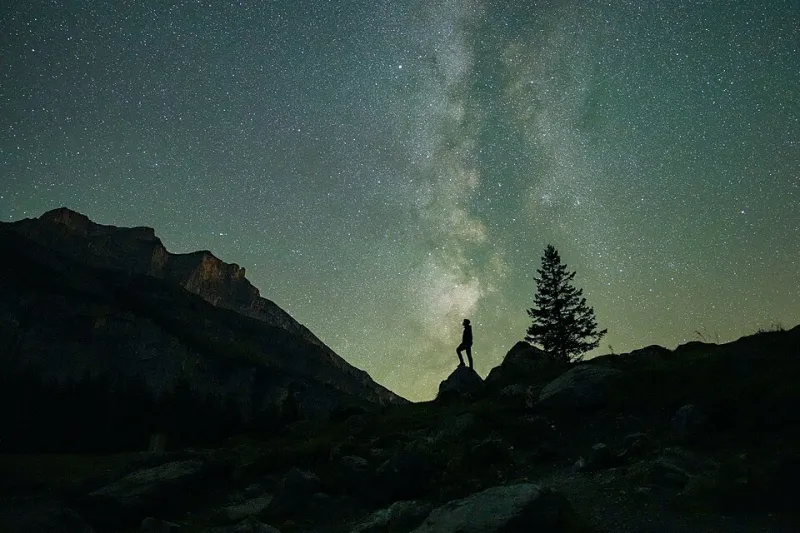
Nature imagery — think mountain ridgelines, forest canopies, ocean horizons — has consistently shown up in attention restoration research as a way to reduce mental fatigue. The concept, developed by Rachel and Stephen Kaplan at the University of Michigan, is called Attention Restoration Theory. The idea is that natural environments give the brain's directed attention system a chance to recover, because they hold our interest without demanding concentrated effort. Even a static image of a nature scene may offer a small but real version of that effect when your eyes drift from your work.
Abstract vs. Minimalist: Two Very Different Cognitive Experiences
Not everyone wants a photo of a Pacific Northwest trail behind their Figma files, though. So what about abstract art or geometric patterns?
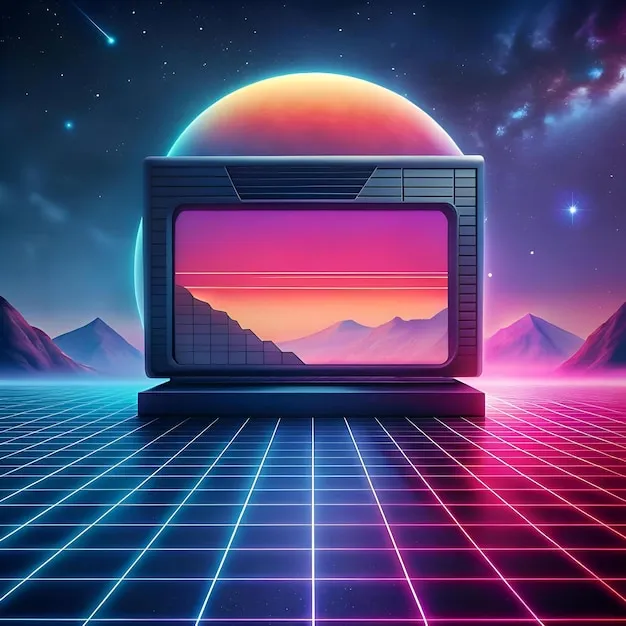
Here's where things get more nuanced. Abstract wallpapers — bold color gradients, intricate fractal patterns, complex compositions — can be visually stimulating in ways that either help or hurt depending on the person and the task. For creative work, a vibrant abstract background may actually prime the brain for lateral thinking. Color psychology research suggests that saturated blues and greens tend to support focused, detail-oriented work, while warmer reds and oranges can boost energy but may also increase feelings of urgency or stress during long sessions.
Minimalist designs, on the other hand, tend to function more like a neutral backdrop — low cognitive load, low distraction. If you're doing deep work that requires sustained concentration (writing, coding, financial modeling), a simple gradient or a single-color background with minimal visual noise may be genuinely useful, not just aesthetic.
Remote workers we spoke with backed this up anecdotally. Marcus, a software developer in Austin, switched from a detailed fantasy illustration to a muted blue-gray gradient last year. "I didn't expect it to do anything," he said. "But I noticed within a week that I was getting into flow states faster. Less visual noise, I guess."
What Your Wallpaper Is Doing on Video Calls
Here's the angle most productivity conversations skip entirely: your desktop wallpaper shows up on video calls.
Not literally — unless you're screensharing. But the vibe of your workspace bleeds into how you present on camera. A cluttered, chaotic visual environment tends to read as disorganized even when your actual desk is clean. A calming, intentional background (whether that's your actual wall or a virtual one) signals competence and presence.
And if you do screenshare regularly? Your wallpaper is literally on display. A FindWallpaper community member who manages a remote design team in Chicago mentioned that she deliberately chose a soft, desaturated geometric wallpaper for screensharing sessions. "It gives my desktop a polished look when I'm presenting. Clients notice. It's a small thing that adds up."
For video call backgrounds specifically, research on visual communication suggests that mid-tone, low-contrast imagery keeps the viewer's attention on your face rather than what's behind you. High-contrast or busy wallpapers can create visual competition that's subtly exhausting for the people watching.
The Burnout Factor
One underreported angle: wallpaper and emotional regulation throughout the workday.
A 2020 study published in the International Journal of Environmental Research and Public Health found that exposure to natural imagery during breaks — even brief, passive exposure — was associated with lower cortisol levels and improved mood recovery. For remote workers whose "breaks" often involve staring at the same screen they work on, a restorative wallpaper might serve as a micro-recovery tool between tasks.
The key word there is restorative. Not every beautiful image is restorative. High-energy, high-contrast visuals might look stunning as wallpaper but could contribute to visual fatigue over an eight-hour day. Think of it like background music: what you'd choose for a party isn't what you'd choose for a long study session.
Building a Wallpaper Strategy That Actually Works
So what does a productive wallpaper setup actually look like? A few practical takeaways:
Match the image to the work type. Deep focus work benefits from minimal, low-contrast designs. Creative brainstorming? A more dynamic, colorful image might help. Consider having a couple of saved options and rotating based on what's on your plate that day.
Go easy on complexity during long sessions. Intricate patterns and detailed illustrations are gorgeous, but they can add up to visual fatigue over time. Save the elaborate stuff for your lock screen.
Think about your video call context. If you screenshare often, keep your wallpaper clean and professional. If your calls are mostly camera-only, the stakes are lower — pick what makes you feel good.
Use nature imagery strategically. Even if it's not your aesthetic, consider a nature-based wallpaper for the hours when you know your mental energy is lowest. Late afternoon slump? A wide open landscape might help more than another cup of coffee.
The bottom line is that your desktop background is a low-effort, high-upside variable in your remote work setup. Most people never touch it. The ones who do — intentionally, thoughtfully — might be onto something.
Your screen is already on all day. It might as well be working for you.